

Quick Summary
Gym clothes smell because bacteria feed on sweat and oils trapped in synthetic fibres, so the key is to clear that residue before it sets. Use a 30-minute cold pre-soak, avoid fabric softener, and let kit dry fully before storing it. Learning how to prevent gym clothes from smelling comes down to these simple habits.
- Bacteria, not sweat itself, cause the sour smell in synthetic gym kit.
- Soak kit in cold water with 250ml white vinegar for 30 minutes before washing.
- Never combine vinegar and bicarbonate of soda in the same soak; they cancel out.
- Skip fabric softener, because it coats fibres and blocks moisture from escaping.
- Take wet kit out of the bag at home and air dry it away from direct heat.
Table of Contents
- Why Gym Clothes Hold On to Sweat Odour
- How to Wash Gym Clothes So They Stop Smelling
- Why Do Gym Clothes Smell After Washing?
- Stopping Gym Clothes Smelling in the Gym Bag
- The Best Way to Dry Gym Clothes
- Fabric Care and Fixing Persistent Odour
- Building a Routine From Gym Bag to Wardrobe
- Frequently Asked Questions
Why Gym Clothes Hold On to Sweat Odour
Gym clothes smell because sweat feeds bacteria, and synthetic fabrics hold onto that bacteria tightly, so learning how to prevent gym clothes from smelling starts with understanding why. Most people blame their kit, but the real cause is what happens between the workout and the wash.
Sweat itself is almost odourless. The smell comes from bacteria that break down sweat and body oils trapped in the fibres. Polyester and nylon, the materials used in most activewear, are good at wicking moisture away from the skin. They are not so good at letting go of the residue left behind.
This is why a shirt can come out of the wash looking clean and still smell sour by the next session. The bacteria have settled deep into the fabric, and a quick rinse does not reach them.
Watch out: leaving damp kit balled up in the bag for hours gives bacteria the warm, wet conditions they need to multiply fast.
How to Wash Gym Clothes So They Stop Smelling
The goal is to remove sweat residue and bacteria before they set in. A good wash routine starts with the right pre-treatment and ends with the right detergent.
Pre-Soaking With White Vinegar or Bicarbonate of Soda
A pre-soak loosens the oils and neutralises odour before the main wash. It is one of the simplest steps in learning how to prevent gym clothes from smelling, and easy to add to your routine.
- Fill a basin or sink with cold water.
- Add 250ml of white vinegar, or 2 tablespoons of bicarbonate of soda.
- Submerge the kit and leave it for 30 minutes.
- Wring gently and move straight to the washing machine.
Do not mix vinegar and bicarbonate of soda in the same soak. They cancel each other out. Pick one, and rinse the garment thoroughly afterwards.
Choosing a Detergent and Avoiding Fabric Softener
The right detergent matters more than most people expect. Standard powders can leave a film on technical fabrics, and that film traps odour.
- Choose a detergent made for sportswear or synthetic fibres.
- Use the amount on the packet, not more. Excess detergent leaves residue.
- Skip fabric softener completely. It coats the fibres and blocks moisture from escaping, which makes smells stick.
The table below sets out the main washing steps covered in this section, so you can check the timings and products at a glance.
| Step | What to do | Time or detail |
|---|---|---|
| Pre-soak | Soak in cold water with vinegar or bicarbonate | 30 minutes |
| Vinegar amount | White vinegar per basin | 250ml |
| Bicarbonate amount | Bicarbonate of soda per basin | 2 tablespoons |
| Detergent | Sportswear or synthetic-fibre detergent | Amount on packet only |
| Fabric softener | Skip entirely | Blocks moisture release |
| Soak pairing | Use one additive, never both | Rinse thoroughly after |
Why Do Gym Clothes Smell After Washing?
If kit still smells sour after a wash, the cause is usually one of four things: residue left in the fabric, a wash cycle that did not clear bacteria, a machine that is transferring odour, or a garment that has reached the end of its useful life. Work through these checks in order before washing the item again.
Check for detergent residue first
Residue is the most common culprit. Excess detergent, fabric softener or a cold, short cycle can leave a film on synthetic fibres that traps sweat and bacteria. Hold the garment up to the light: a stiff feel, visible white streaks or a faint perfumed smell that turns sour when damp all point to residue. Run a rinse-only cycle with no detergent, then air dry. If the smell improves, reduce your detergent dose and skip softener entirely.
Review the wash cycle
A 30°C quick wash is fine for lightly worn kit, but heavily sweated synthetic fabrics often need a longer cycle at 40°C to flush residue from the fibres. Check that the load is not packed tight, synthetics need room to move so water and detergent can penetrate. Also confirm the cycle has finished promptly; leaving damp kit in the drum for hours lets bacteria multiply before drying even begins.
Rule out the machine
A washing machine can pass odour from one load to the next. Inspect the door seal for dark specks or slime, and run a hot maintenance wash with a washing-machine cleaner according to the manufacturer's instructions. Clean the detergent drawer and the filter if your machine has one. If the drum smells musty when empty, that is the source.
Decide whether the garment is recoverable
Some items hold odour because the fibres have degraded. Pilling, thinning patches, stretched elastane or a permanent sour smell after a vinegar soak all suggest the fabric is trapping bacteria in damaged areas. In that case, no wash routine will fix it, retire the item or demote it to low-sweat use.
Watch out: do not keep re-washing a smelly garment at low temperature with extra detergent; that usually adds residue and makes the problem worse.
Stopping Gym Clothes Smelling in the Gym Bag
Much of the smell builds up in the bag before the wash even starts. Small habits make a big difference here.
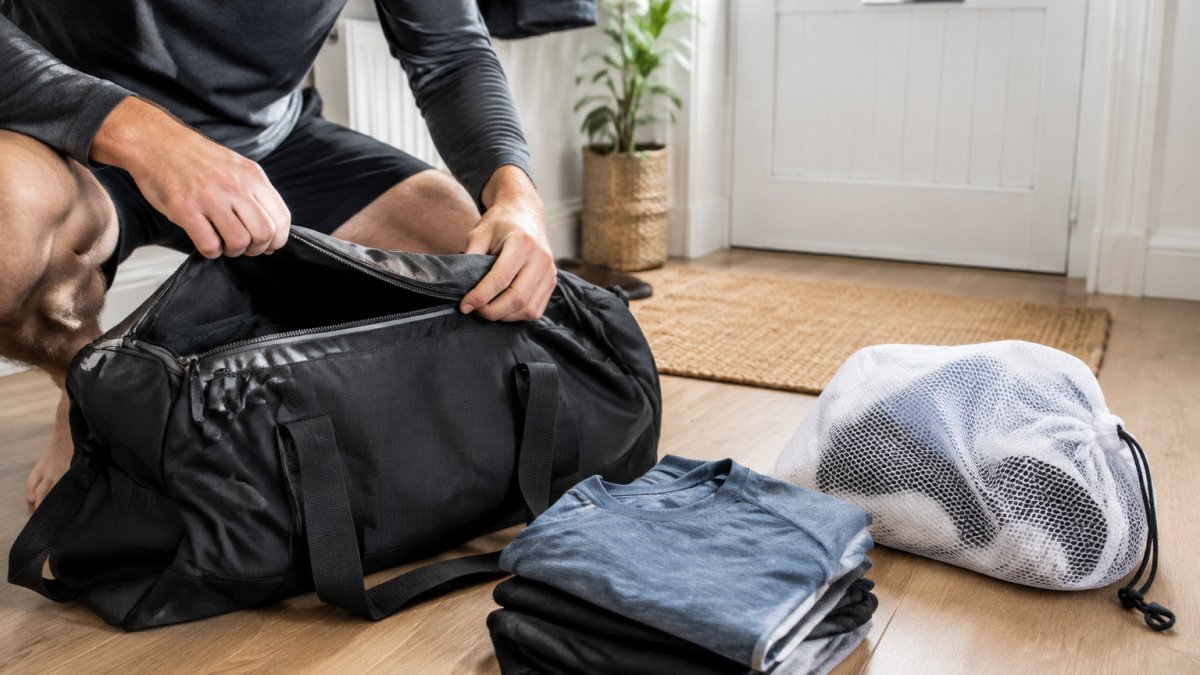
- Take wet kit out of the bag as soon as you get home.
- Hang it up or spread it out to air dry.
- Use a separate ventilated mesh bag for sweaty kit.
- Never store damp clothes in a closed holdall overnight.
The Russ Club range is built for heavy training, so pieces suited to rough use are worth choosing. Our durable shirts for heavy lifting show which options hold up to frequent washing.
The Best Way to Dry Gym Clothes
Drying is where many people undo all their hard work. Heat can set odour into synthetic fibres, and high-heat tumble drying can also weaken elastic and stretch shape.
Air drying is the safest option. Hang kit inside out in a well-ventilated room, away from direct heat.
If you use a dryer, choose a low heat setting and remove items as soon as the cycle ends. Some gym clothes shrink in a hot dryer, so check the label before you start. Our guide to gym clothes that do not shrink in the dryer covers which materials hold their size best.
Fabric Care and Fixing Persistent Odour
Persistent odour needs a different approach from routine washing. The fix depends on the fabric, how the additive is used, and whether the smell is in the garment or the machine. Use the care label as your first reference, then apply the guidance below.
Match the treatment to the fabric
- Polyester and nylon: These hold odour most stubbornly. A 30-minute cold soak with 250ml white vinegar per basin, followed by a 40°C wash with sportswear detergent, is the standard starting point. Avoid hot washes above 40°C, which can set odour and damage wicking finishes.
- Elastane blends: Keep temperatures at 30-40°C and avoid prolonged soaking, which can weaken stretch fibres. Air dry flat or hang; do not tumble dry on high heat.
- Merino wool: Use a wool-specific detergent, cool water and no vinegar soak unless the care label permits it. Bicarbonate of soda can be used sparingly as a pre-treatment paste on localised odour, then rinsed thoroughly.
- Cotton: More tolerant of heat and bicarbonate, but still avoid overloading the machine. A 40°C wash with 2 tablespoons of bicarbonate added to the drum can help with lingering smells.
Use additives safely
Vinegar and bicarbonate of soda work in different ways: vinegar helps break down residue and neutralise odour, while bicarbonate is mildly alkaline and can help lift oils. Do not combine them in the same soak, they react and cancel each other out. Rinse garments thoroughly after either treatment, and do not use vinegar on garments with metal trims or on fabrics where the care label warns against acid. If you use an antibacterial laundry additive, follow the packet dose and do not exceed it; more is not better and can irritate skin.
Troubleshoot odour that will not shift
Work through this sequence before giving up on a garment:
- Re-wash with no detergent on a rinse-only cycle to rule out residue.
- Soak in 250ml white vinegar and cold water for 30 minutes, then wash at 40°C with sportswear detergent.
- Clean the machine: run a hot maintenance cycle with a machine cleaner and check the door seal and filter.
- Try a bicarbonate pre-treatment: make a paste with 2 tablespoons of bicarbonate and water, apply to underarm and collar areas, leave for 15 minutes, then wash as normal.
- Assess the garment: if odour persists after steps 1-4, the fibres are likely damaged or permanently colonised by bacteria. Retire the item.
NHS guidance on washing clothes at the right temperature
Watch out: do not mix vinegar and bicarbonate in the same soak.
Building a Routine From Gym Bag to Wardrobe
A simple routine keeps smells under control without much effort:
- Remove wet kit from the bag at home
- Rinse or pre-soak within 24 hours
- Wash at 30 to 40 degrees with sportswear detergent
- Skip fabric softener
- Air dry away from direct heat
- Store fully dry kit in a breathable drawer
Good gym clothes can also work beyond the gym. If you want pieces that move from training to everyday wear, see our versatile gym wear for daily life.
Start with the basics this week: pre-soak, use the right detergent, and air dry everything. Russ Club makes durable gymwear for training at every stage of life, from heavy lifting to BJJ sessions. Shop now and build a kit that lasts.
Frequently Asked Questions
Why do gym clothes still smell after washing?
The most common reason is that sweat residue and bacteria were not fully removed, often because clothes were left damp in the gym bag for hours before washing, or because the wash was too cool to break down body oils. Synthetic fabrics such as polyester and nylon also trap odour-causing bacteria more readily than cotton. Washing promptly, using a detergent suited to sportswear, and avoiding overloading the machine usually solves the problem. If the smell persists, a pre-soak in white vinegar or a bicarbonate of soda paste before the wash can help lift the residue.
Should you wash sweaty gym clothes straight away?
Yes, where possible. Bacteria multiply quickly in warm, damp fabric, so the longer sweaty kit sits in a bag, the harder the odour is to remove. Shake out the items, turn them inside out and hang them to air for a short time if you cannot wash them immediately. Avoid leaving them balled up in a sealed bag overnight. Washing the same day gives the best results, and it keeps the fabric fresher for longer.
Can you leave gym clothes to soak overnight?
A soak of around 30 minutes to a few hours is generally safe and effective, but leaving synthetic gym clothes to soak overnight is not recommended unless the care label allows it. Long soaks in strong solutions can weaken elastane, fade colours and degrade printed logos. For a pre-soak, use cool water with a small amount of white vinegar or a spoonful of bicarbonate of soda, check the care label first, and rinse thoroughly before the main wash.
How should you dry gym clothes to keep them fresh?
Dry gym clothes fully and quickly. Air-drying in a well-ventilated room away from direct heat is the best option, as it avoids shrinking and protects elastic. Hang items so air can circulate around the seams and underarm areas, which are where moisture collects. Avoid leaving clothes in the washing machine or the gym bag while damp, as this is the main cause of returning odour. If you use a tumble dryer, check the care label first and use a low heat setting.
